Nature Discoveries Installment #1: pea vines, controlled tumors, and undiscovered flies at Durant Nature Preserve
Many living things thrive right under our noses without us even noticing. Most of these critters are on the small side. Some are so small we wouldn’t notice them if they were in front of our eyes. Yet others are easy to see, if only we knew what we were looking at. We can sometimes make discoveries if we pay attention to these critters. Some might find it difficult to believe that real mysteries are still out there in an urban Nature Preserve “oasis” like Durant: not wolves, perhaps, but smaller mysteries: species no one has found before, or species no one has found in North Carolina so far, or species about which little is known (except how to recognize them if we see them). I study critters like that in NC, including Durant Nature Preserve, trying to find things that might not catch other people’s attention. Here is a recent example:
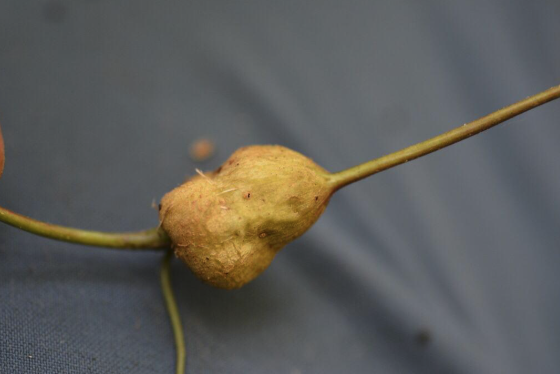
This photo shows a stem gall on a vine called American Groundnut (Apios americana; the vine is distantly related to garden peas).
The stems of this plant are normally thin, like the stems to the right and left of the lump in the center. The lump (about 1-2 cm across) is called a "gall," which is made by a parasite. What is a gall? I think about it like this: We have chemicals in our bodies (called hormones) that tell us when and how much to grow. Plants also have hormones that serve the same function. Gall-formers are other organisms that make plant hormones, so they can make plants grow for them. Gall formers can make chemicals that mimic plant hormones. They live in the plant tissues, secreting plant chemicals to grow plant parts into shelter and food (plant tissue), sometimes growing continuous food for weeks at a time, while their babies eat the newly growing food and develop inside the galls. When the gall-formers develop into adults, they exit the galls (“drilling” their way out), often flying off to mate and lay eggs on another plant of the right species to start the process again. Galls can be made by some bacteria, fungi, nematodes, and many other organisms. But most gall-formers are insects (wasps, flies, moths, beetles, or aphid relatives) or mites (vegetarian relatives of spiders).
So when I see part of a plant that looks swollen or misshapen, I take a second look. I found a gall like this last year on American Groundnut, but nothing ever emerged from it. When I found this one this summer, I put the gall in a small container with a small piece of damp paper towel, and within a few days, several flies had emerged from the gall into the container.
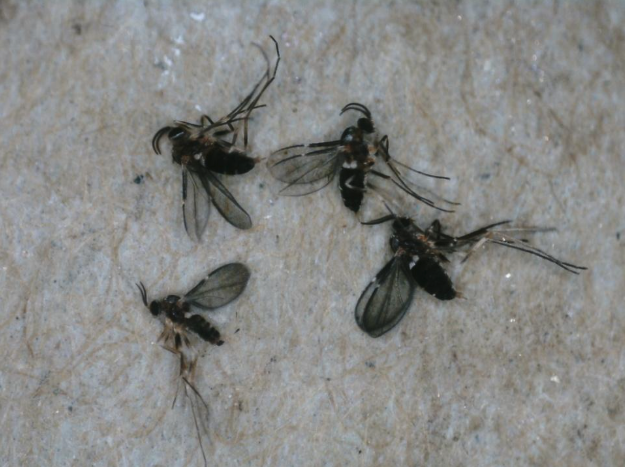
These are flies in the genus Neolasioptera. Although species in this genus are known for making galls on lots of other plants (each fly species specializing, making galls on only one or a few plant species), no such galls were known on American Groundnut. In August, I sent a male and a female fly to Dr. Ray Gagné, an expert who worked at the Smithsonian Institute (and is retiring, as he is now 90 years old). He confirmed the genus and also said that this is likely to be a species new to science. Yet it takes work to describe a species and to publish that description. Dr. Gagné has his hands full enough with other projects, so unless someone picks up the torch, this species may remain undescribed. Still, now we know a little bit more about this previously unknown species.
When you are out on the trails, keep your eyes open, and your camera ready (and your link to iNaturalist). Who knows when you might come across something most people have not paid attention to before?